本文へジャンプ

【人口増加社会から高齢化と人口減少社会のありようは?】


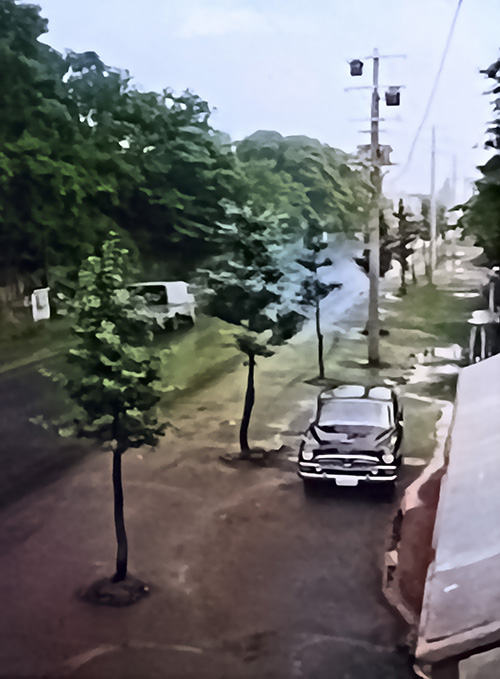
 写真は1957-8年当時と推定される、札幌市中央区北3条西11丁目の幹線道路「石山通」の様子。
 白黒画像だったものをわたしのMacで「カラー化」させた写真であります。カラー化にはリアルタイム感の復元効果があると個人的には思います。で、このようにしてみて、この土地で3歳から15歳くらいまで成長した人間としては、深く「時代相」を実感させられている。
 わたしの年代からもう少し上の世代、ベビーブーム世代という「人口急増」時代の極限的な社会状況だったのだと、いまは深く実感させられるのですね。この石山通は札幌でも有数の超幹線道路で、石切山と言われた石山軟石採取地から建設需要旺盛な札幌市街地域に資材を運搬させる明治初期からのメイン道路。
 その石山通すら、舗装されていなかった時代なのですね。明治期からは馬による輸送が中心で、その馬の糞〜馬糞が乾燥して「馬糞風」という独特の「風情」が印象的に語られていたほど。
 こういう時代は、戦後の人口急増によってそれこそ「生めよ、増やせよ」という時代状況であり、需要が完全に生産活動を大きく上回っていた時代相。まさに「つくれば売れる」という押せ押せの社会。
 まったく現代の人口減少社会とは違う社会だったことが、空気感から伝わってくる・・・。
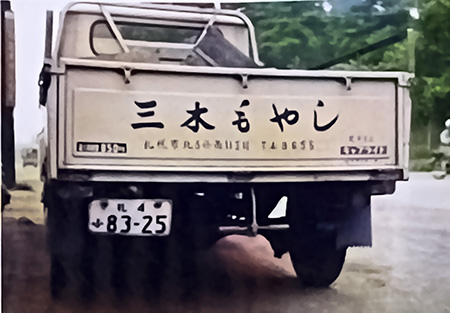
 これはわが家業の商用車の後ろ姿。
 モータリゼーションの急速な盛り上がりのなかで、それを商品配送に有効活用すること「だけ」でも、同業他社との差別化になり、それで企業成長につながっていくという「夢のような」時代だった。イマドキから考えたら、え、その程度の差別化で成長が可能だったのかと不思議に思えるほど。
 日本社会で人口急増によるマーケットの自然拡大があらゆる商圏で盛り上がっていった。そしてこの企業成長を担った世代は、戦争による世代人口の極小化もあって、競争もまた極小だったのだと言える。
 ・・・こういう時代は完全に「おわった」時代なのだろう。
 いまのわれわれ世代は、そういった残滓がまだ考え方の基底にあって勘違いを生んだりする。
 一方で、日本社会は徐々に人口停滞から減少する可能性の高い社会に変容してきている。こういう社会の中で、どのような「生存戦略」が必要なのか。ほぼ同様と思えるアメリカ社会からは、ちょっと前のパソコン革命、そしていまのAI革命などの「革新」が次々と世に現れてくる。さて、あしたはどっちだ?

●お知らせ
拙書「作家と住空間」幻冬舎から電子書籍で発刊
お求めはAmazonで。
https://amzn.asia/d/eUiv9yO
English version⬇

[What Does the Transition from a Society of Population Growth to One of Aging and Population Decline Look Like?]
If our mindset remains fixated on the postwar era’s assumption that “if you build it, they will come,” we will be ill-equipped to adapt to the society of the future. …

 This photo shows Ishiyama-dori, a major thoroughfare in Kita 3-jo Nishi 11-chome, Chuo-ku, Sapporo, and is estimated to date from around 1957–1958.
It is a black-and-white image that I have “colorized” using my Mac. Personally, I believe colorization has the effect of restoring a sense of the time period. Seeing it this way, as someone who grew up in this area from the age of three to about fifteen, I am deeply struck by the “spirit of the times.”
 It really drives home to me now just how extreme the social conditions were during that era of “rapid population growth”—the Baby Boom generation, which is a bit older than my own. Ishiyama-dori is one of Sapporo’s major thoroughfares; since the early Meiji period, it has served as the main route for transporting construction materials from the Ishiyama soft stone quarry—known as Ishikiri-yama—to the city center, where demand for building materials was high.
It was a time when even Ishiyama-dori wasn’t paved. From the Meiji period onward, horse-drawn transport was the primary method, and the horse manure—once dried—was so distinctive that it was described as having a unique “charm” known as “horse manure-like.”
 This was an era marked by the postwar population boom—a time when the slogan “Be fruitful and multiply” truly applied, and demand far outstripped production capacity. It was a society driven by the mindset that “if you make it, it will sell.”
The atmosphere conveys just how different this society was from today’s population-declining society…

 This is the rear view of a commercial vehicle from my family business.
Amid the rapid rise of motorization, it was a “dream-like” era where simply making effective use of it for product delivery was enough to differentiate us from competitors and lead to corporate growth. Looking back from today’s perspective, it’s almost hard to believe that growth was possible with such a minimal level of differentiation.
 In Japanese society, the natural expansion of the market driven by rapid population growth was booming across every commercial district. And the generation that drove this corporate growth faced minimal competition, partly due to the war-induced drastic reduction in the size of their generation.
…I suppose that era is completely “over” now.
Our generation today still has remnants of that mindset at the core of our thinking, which sometimes leads to misunderstandings.
 On the other hand, Japanese society is gradually transforming from one of population stagnation to one with a high probability of decline. What kind of “survival strategy” is necessary in such a society? In American society, which seems almost identical, “innovations” such as the recent PC revolution and the current AI revolution have been emerging one after another. So, which way will tomorrow go?

● Announcement
My book, “Writers and Living Spaces,” has been published as an e-book by Gentosha.
Available on Amazon.
 

【刺青男からサウナで絡まれる、これが〝多文化共生〟?】


 とくに温泉施設の場所と名称は記しませんが、北海道で大量のインバウンドがある地域の公衆向け施設にて。
 わたしは健康増進のため1日の歩数確保で10,000歩以上を心がけています。クルマで遠距離移動でも、先日の北東北〜道南ドライブ観桜旅などでも毎日ほぼ12,000歩程度の歩数を早歩き散歩しています。
 で、この日もある程度短時間に歩数を確保する運動量で、肉体的にはそこそこの疲労感。汗ばんだ衣類を脱ぎ捨てて温浴施設に入浴した。
 わたしは温浴を8−10分程度たっぷりと済ませてカラダを温めてから洗面などをして、サウナや野天風呂を楽しむというのが定番コース。そのように過ごした後サウナに入っていった。久しぶりにこの温浴施設に来たので、サウナ内での敷物は持ち込まずにタオルを持って入った。っていうか、肉体的疲労感から気が回っていなかったことはある。
 でもそのサウナ内には敷き布が内部に敷かれていて定期的に施設側でそれが交換されてもいる様子だった。別に敷物シートを敷いて、というアナウンスはとくに書かれていない。
 中に入ったら7−8人程度の広さの中に先客が5−6人。わたしが入ろうとしたら1人が席を空けるように移動してくれた。それに感謝する目線挨拶をしたが、そのとき、その空けていただいた隣席に「刺青」を入れた人物がいることに気付かされた。とっさにどうしようかと思ったが、流れに沿ってその席に座った。
 その数秒後、刺青男が小声で「どうして敷物シートを持ってこないのだ」というコトバを口走ってきた。
 わたしは20代の頃、1度クルマ運転の際に反社人物に急ハンドル操作されて危険に陥って、なおその後因縁をつけられた経験がある。結局その男の家に付き合わされ、目線で「日本刀」を見せつけられ脅された経験がある。そういう経験から、かれらの「静かな口調」というのには、むしろ危険アラート反応が働いてくる。
 そこで一切会話をせずにその場から立ち去ることにした。まぁ座席下敷き敷物シートについてのクレーム自体はわからないではないけれど、かれらの作戦である危険度は高いと判断したのだ。ことを荒立てずに推移させるには、わたしが外に出ていくことがもっとも「穏便」と思われたのだ。
 その後、体力の回復まで15分程度外の椅子・ベンチなどで日光浴して時間を空けてその人物との無用な接触を避けた。その後は関わることなく、無事にある程度の休息を得て浴場を退出した。
 しかし納得はできなかったので施設の従業員の方に「刺青の人物から絡まれたのだけれどここは刺青いいの?」と申告したが「あ、こちらでは刺青OKですので」と明るい言い方。 「・・・」。
 最近は海外客は面白がってボディペインティングしている方が多いので、インバウンド対応としてこういう施設が増えているのかと思い至った。それが「多文化共生」という掛け声で正当化されてもいるようだ。
 しかし、裸で無防備な浴場で、日本人的には暴力性の象徴である刺青の人間がいれば、これまでの日本人の安全概念が大きく揺らいでいく。多文化共生という名目の元で、日本の生活文化が壊されていくのではないか。わたし自身、はじめて気づかされることになった次第。みなさん、どうお考えだろうか?

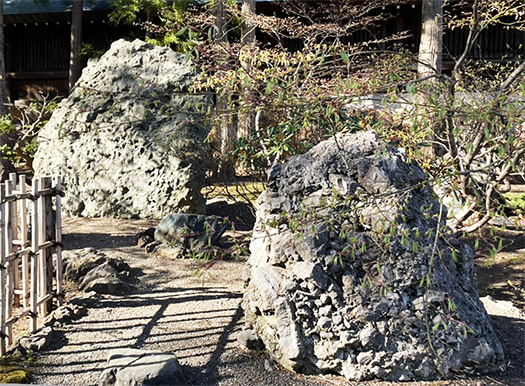
<写真は日本の文化の象徴「さざれ石」。大小の小石が凝集して岩石になっている>

●お知らせ
拙書「作家と住空間」幻冬舎から電子書籍で発刊
お求めはAmazonで。
https://amzn.asia/d/eUiv9yO

English version⬇

[Harassed by a Tattooed Man in a Sauna—Is This What Multicultural Coexistence Looks Like?]
Western tourists often have a tradition of body art-style tattoos. Is that what multicultural coexistence is supposed to be? Can the safety of Japanese society be guaranteed? …

 I won’t mention the specific location or name of the hot spring facility, but it was a public facility in a region of Hokkaido that attracts a large number of international visitors.
I aim to walk at least 10,000 steps a day to improve my health. Even when traveling long distances by car, such as on my recent cherry blossom-viewing road trip through northern Tohoku and southern Hokkaido, I walk briskly for about 12,000 steps every day.
 So, on this day as well, I had walked enough to reach my step goal in a relatively short time, leaving me feeling moderately tired. I shed my sweaty clothes and entered the hot spring facility.
My usual routine is to soak in the hot bath for a good 8–10 minutes to warm up my body, then wash up before enjoying the sauna and open-air bath. After doing that, I headed into the sauna. Since it had been a while since I’d visited this facility, I didn’t bring a mat into the sauna; I just took a towel. Or rather, I suppose I simply hadn’t thought of it due to my physical exhaustion.
However, there were mats laid out inside the sauna, and it seemed the facility staff replaced them regularly. There wasn’t any specific announcement or sign asking people to bring their own mats.
 When I went inside, there were about 5 or 6 people already in the room, which could hold 7 or 8. As I was about to enter, one person moved over to make room for me. I gave him a grateful look, but at that moment, I noticed that the seat he had vacated was occupied by a man with a tattoo. I wondered for a split second what to do, but I went with the flow and sat down in that seat.
 A few seconds later, the tattooed man muttered under his breath, “Why didn’t you bring a seat cover?”
When I was in my twenties, I once had a dangerous experience while driving when an anti-social element made a sudden, sharp turn, and I was later harassed by him. In the end, I was forced to go to his house, where he threatened me by flashing a “Japanese sword” at me with his eyes. Because of that experience, their “calm tone” actually triggered a danger alert in me.
So I decided to leave the area without saying a word. Well, I wasn’t entirely unaware of the complaint regarding the seat mat, but I judged that their tactics posed a high level of danger. To avoid making a scene, I thought the most “peaceful” course of action was for me to simply walk out.
 Afterward, I spent about 15 minutes sunbathing on chairs and benches outside to recover my energy, giving myself some time to avoid unnecessary contact with that person. After that, I managed to get some rest without any further involvement and left the bathhouse safely.
However, I couldn’t accept it, so I reported the incident to a staff member, asking, “I was harassed by a man with a tattoo—are tattoos allowed here?” but they replied cheerfully, “Oh, tattoos are fine here.” “…”
It occurred to me that since many foreign visitors these days enjoy body painting for fun, perhaps the number of facilities like this is increasing as a way to cater to inbound tourism. It also seems to be justified under the slogan of “multicultural coexistence.”
However, in a bathhouse where people are naked and defenseless, the presence of someone with a tattoo—which is seen as a symbol of violence in Japanese culture—greatly undermines the traditional Japanese concept of safety. I’ve come to realize for the first time that Japanese lifestyle and culture might be being destroyed under the guise of “multicultural coexistence.” What do you all think?

● Announcement
My book, “Writers and Living Spaces,” has been published as an e-book by Gentosha.
Available on Amazon.

【蝦夷富士には〝エゾエンゴサク〟が似合うかなぁ・・・】


 世は連休まっ盛り。
 カミさんのカラダのコリ・痛み緩和のためにお好みのニセコの日帰り温泉へ。片道1.5時間。なかなかの長距離運転ですが、先般の北東北〜道南サクラの旅路も無事完走したので、たのしく往復。
 先日は函館方面からの帰路でこちらのニセコ周辺を通ってきましたが、今回はことしはじめての札幌からのルート走行であります。やはり普段の交通量に比較してクルマが多い。当方はそれほど急がないので、希望者にはどんどん道を譲って追い越ししていただいておりました。ようやくわたしもそういうドライバーになってきた(笑)。さすがに連休なので大阪とか、関東とかのナンバーのクルマが元気よく追い越していく。「おお、広大な北海道に着いたぜ、未踏の大地だ、爆走だ。前走車なんて邪魔だ〜」という心理かなぁ・・・。
 もっと若いときにはわたしがそういう追い越しドライバーだったのですが、逆の立場になってくると、いろいろ違う「風景」、人間心理が見えてくるものですね。
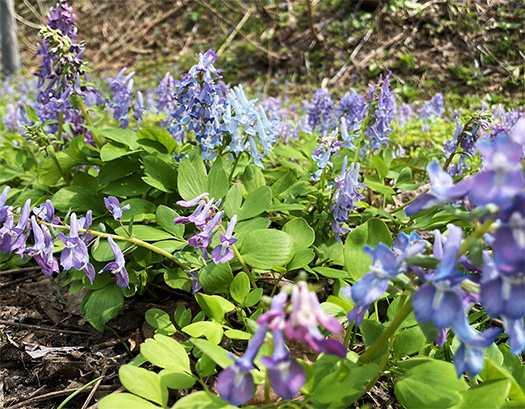
 そういうドライブ先ですが、日頃の10.000歩以上散歩習慣は維持したいと、ニセコに着いてから日帰り温泉施設周辺を、入浴希望時間の夫婦間相違からカミさんとは別ルートで歩きまわっておりました。今時期は北海道西部日本海側地域で、写真の〝エゾエンゴサク〟が散歩の道端を彩ってくれている。
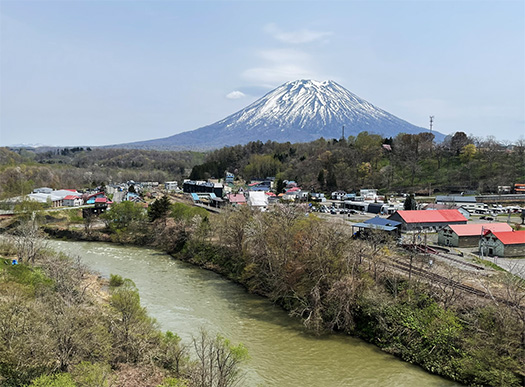
 太宰治の短編小説『富嶽百景』では「富士に月見草」という対比が、秀逸な表現として日本人のハートを射貫いたのですが、北海道ではやはり蝦夷富士・羊蹄山がその姿カタチが富士山と相似している。富士山は遠くから遠望するのが普通だけれど、羊蹄山はごく身近にその山容の均整ぶりを訴えかけてくれる。
 一方、この時期の〝エゾエンゴサク〟の控えめな美感はかわいらしい。
 こういう極大と極小のふたつを心象対比させるという感覚は、太宰さんが日本人に訴求した「新感覚」だったのでしょう。そしてこの〝エゾエンゴサク〟との対比は北海道西部の特殊な春の様相かと思われました。
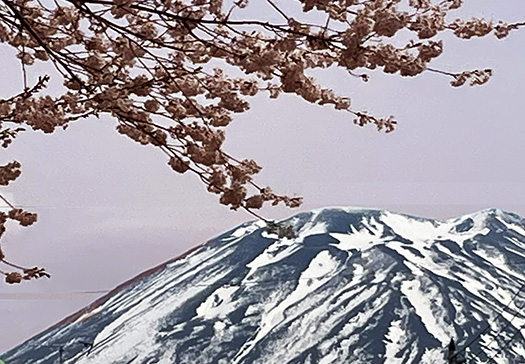
 そしてこの高地平原でもサクラは最後の盛り。北海道でも味わえる日本人の定番基層心理・・・。

●お知らせ
拙書「作家と住空間」幻冬舎から電子書籍で発刊
お求めはAmazonで。
https://amzn.asia/d/eUiv9yO

English version⬇

[I wonder if “Ezo engosaku” would look good on Ezo Fuji…]
“Moonflowers on Mount Fuji” is a poetic image with which Osamu Dazai pierced the hearts of the Japanese people. Such contrasts struck a chord with the Japanese psyche at its core. …

 It’s the height of the long holiday weekend.
We headed to my wife’s favorite day-trip hot spring in Niseko to help relieve her muscle stiffness and aches. It’s a 1.5-hour drive each way. It’s quite a long drive, but since we successfully completed our recent cherry blossom tour from Northern Tohoku to Southern Hokkaido, we enjoyed the round trip.
The other day, we passed through the Niseko area on our way back from Hakodate, but this time we took the route from Sapporo for the first time this year. As expected, there were more cars on the road compared to usual. Since I wasn’t in a particular hurry, I kept letting other drivers pass me whenever they wanted. I guess I’ve finally become that kind of driver myself (lol). Being a long weekend, cars with license plates from places like Osaka and the Kanto region were zooming past us energetically. I imagine their mindset was something like, “Oh, we’ve made it to vast Hokkaido—uncharted territory! Let’s go full throttle! The car in front is just in the way…”
 When I was younger, I used to be that kind of overtaking driver myself, but now that I’m on the other side, I can see a whole different “landscape” and human psychology.
Speaking of this drive, I wanted to maintain my daily habit of walking over 10,000 steps, so after arriving in Niseko, I walked around the area near the day-trip hot spring facility—taking a different route from my wife due to our differing preferred bathing times. At this time of year, in the western Hokkaido region along the Sea of Japan, the “Ezo Engosaku” (Ezo evening primrose) in the photo is coloring the edges of the walking paths.
In Osamu Dazai’s short story collection *Fugaku Hyakkei* (One Hundred Views of Mount Fuji), the contrast between “Fuji and the evening primrose” struck a chord with the Japanese heart as a brilliant expression. Similarly, in Hokkaido, Mount Yotei—known as “Ezo Fuji”—resembles Mount Fuji in its shape and form. While Mount Fuji is typically viewed from afar, Mount Yōtei stands right before you, showcasing the harmony of its form.
On the other hand, the understated beauty of the “Ezo Engosaku” at this time of year is simply charming.
This sense of contrasting the extreme large with the extreme small in one’s mind was likely the “new sensibility” that Dazai sought to convey to the Japanese people. I had thought that this contrast with the “Ezo engosaku” was a unique feature of spring in western Hokkaido.
And even on this highland plain, the cherry blossoms are in their final bloom. A classic, fundamental aspect of the Japanese psyche that can be experienced even in Hokkaido…

● Announcement
My book, “Writers and Living Spaces,” has been published as an e-book by Gentosha.
Available on Amazon.

【新たな家系〝古文書〟発掘 徹底調査へ】


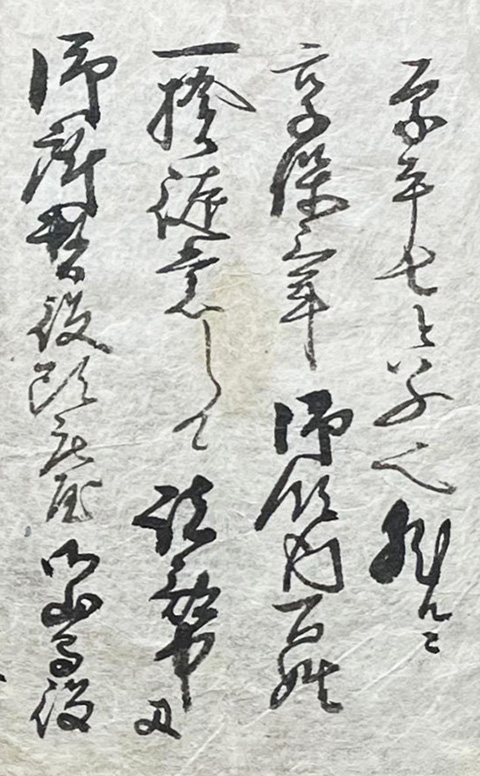
 一昨日、わが家本家にてふとみつかった古書簡とおぼしき巻物文書。
 それを簡易に写真撮影してPhotoshopなどの画像整理を施して、次兄をはじめとする兄姉LINEにて情報公開したところ、次兄から「これは凄い発見だね。広島県立文書館の西向浩介さんに送って現代文にして貰い、虫食い等の処理をして貰い、検証して貰い原氏の情報も探して貰ったら。九州からの帰りに会ってきたら?」という反応。次兄はわたしに家系史探究の業務引継命令を下してきた本人なので、わたしとしても共同探究人として信頼している。一族に関する古文書「原氏由来の事」を公的研究機関である広島県立文書館の西向浩介さんに送ってその信憑性・歴史的価値に裏付けを与えてきた経験からして、直感的に「これは」と思えたのだと思います。
 ということで、昨日からさっそく行動開始。この家系〝古文書〟を研究素材として送付するのに必要な段取りを整え、資料類も添付しようと「会議」で打合せ。その過程で、前に評価をいただいた「原氏由来の事」古文書との比較対照を素人ながら、行って見ている次第。

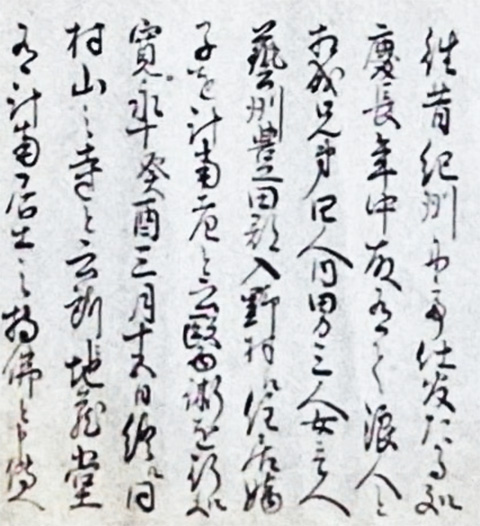
 こちらが「原氏由来の事」の筆跡ですが、上の今回新発掘の家系〝古文書〟の筆跡とは、大きく違うことが素人目にも明白だと思われます。
 「原氏由来の事」は1815年に六世の祖・三木寛蔵さんが一族の故地、広島県東広島市河内町入野を訪ね歩いて、その時点から約100年前当時の先祖・「原平七」さんの事跡を中心に探索した記録文。現在から300年以上前の時点の祖先の状況を活写してくれている。その筆跡は1個1個の漢字に対して丁寧に、几帳面に書いたと伝わってくる筆跡。
 それに対していちばん上の今回新発見の古文書は、流麗な崩し方、流れるような筆跡が明確。
 わたしはこういった古文書解析についての知識蓄積はありませんが、一見して書き手の個性の違いは伝わってくる。
 もし、この両文書の筆者が別人であるとすると、今回の文書は「誰が書いたのか?」という家系史研究にとっての巨大な疑問に突き当たる。同族の親族であることが可能性が高いけれど、しかし、書かれている内容は、どうも「原氏由来の事」の内容と被っている。
 いずれにせよ、公的研究機関の協力を得て調査の信憑性も確保しながら、内容を徹底解析したい。

●お知らせ
拙書「作家と住空間」幻冬舎から電子書籍で発刊
お求めはAmazonで。
https://amzn.asia/d/eUiv9yO

English version⬇

[New Family Lineage “Historical Documents” Unearthed: A Thorough Investigation to Follow]
This is truly astonishing. The discovery of historical documents that serve as foundational records for the family lineage. We intend to submit them to public research institutions as research materials for investigation, with the aim of establishing their universal significance. …

 The day before yesterday, I stumbled upon what appears to be an old scroll—likely a historical letter—at our family’s ancestral home.
I took some quick photos of it, edited the images in Photoshop, and shared the information with my siblings via LINE, starting with my second-eldest brother. He replied, “This is an amazing discovery. Why don’t you send it to Mr. Kosuke Nishimuki at the Hiroshima Prefectural Archives? He can transcribe it into modern Japanese, restore any damaged parts, verify the contents, and even look into information about the Hara clan. “Why don’t we meet up when you’re coming back from Kyushu?” My second oldest brother is the one who originally handed over the task of researching our family history to me, so I trust him as a fellow researcher. Based on my past experience of sending ancient documents related to our clan—specifically “The Origins of the Hara Clan”—to Mr. Kosuke Nishimuki at the Hiroshima Prefectural Archives, a public research institution, to have their authenticity and historical value verified, I think he intuitively sensed that “this is it.”
 So, I sprang into action yesterday. I held a “meeting” to discuss the necessary arrangements for sending this family “ancient document” as research material and to attach supporting documents. In the process, I’m attempting—as an amateur—to compare and contrast it with the “The Origin of the Hara Clan” document, which had previously received a favorable evaluation.

This is the handwriting from “The Origin of the Hara Clan,” but even to the untrained eye, it is clear that it differs significantly from the handwriting in the newly discovered “ancient document” regarding the family lineage mentioned above.
 “The Origin of the Hara Clan” is a record compiled in 1815 by the sixth-generation ancestor, Kanzo Miki, who traveled through his clan’s ancestral home in Irino, Kawachi-cho, Higashi-Hiroshima City, Hiroshima Prefecture, to investigate the deeds of his ancestor, “Hara Heishichi,” who lived approximately 100 years prior to that time. It vividly depicts the circumstances of our ancestors more than 300 years ago. The handwriting conveys a sense of meticulous care, with each individual kanji character written with precision and attention to detail.
In contrast, the newly discovered ancient document at the top of this collection clearly features a fluid, cursive style with a flowing handwriting.
While I lack specialized knowledge in the analysis of ancient documents, the difference in the writers’ individual styles is apparent at first glance.
 If the authors of these two documents are different people, this new document raises a massive question for genealogical research: “Who wrote it?” While it is highly likely that they are relatives from the same clan, the content appears to overlap with that of “matters concerning the Hara clan’s origins.”
In any case, I wish to thoroughly analyze the content while ensuring the credibility of the investigation with the cooperation of public research institutions.

● Announcement
My book, “Writers and Living Spaces,” has been published as an e-book by Gentosha.
Available on Amazon.


【本家で法事。位牌転記の〝家系図&古文書〟預かり】


 昨日は亡母の40年目の命日に当たる法事で、長兄の家にて兄姉が参集。
 4年後には父の命日からも「五十回忌」ということになります。ここまで多年にわたって欠かさず命日の供養を重ねられてきたこと、深く父母に感謝しております。
 その後、こういう機会をとらえての「家族会議」。年長の兄85歳、最年少の末っ子のわたしが74歳ということで、話はこの世のNEXTを踏まえたさまざまについてのエンドレス談義。これまでの日本社会が「家」制度中心社会だったものが、わたしたち世代になって「個人」主義が主流の社会に変容してきている。しかしそうは言っても家系ということの永続性も要件ではあり続けるだろうとの予測。
 そういうなかで、わたしたち世代はなにごとか、決めていく必要がある。
 情報では、札幌市の管理する墓園「里塚霊園」でも「墓仕舞い」が頻出してきているとのこと。
 一方で、ひとの自然な感情として父母への情愛は不変な価値だと思える。自分が父母から受けた情愛に対して、それをまったく無視して生きる人生など考えられない。そしてその父母からその先の祖先が永眠している墓という民族固有の伝統的価値は、やはり守り続けていく必要があるだろう。
 次兄から業務引継命令を受けてわたしが家系史と向き合っていることはみな了解してくれていて、長兄からも伝承されてきた書類や写真などを「基礎資料」として預けられた。
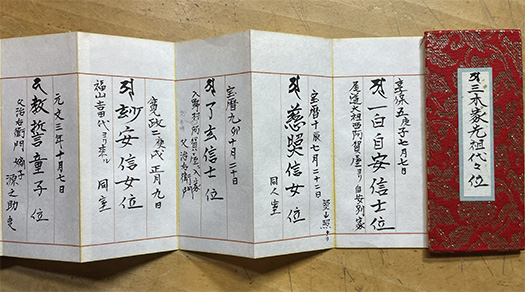
 疲れをひと眠りして解消後、大量の写真類などを整理整頓しておりますが、伝承の位牌に基づいて転記された檀家寺の監修による写真の「家系図」で再度、家系の流れを確認。一方でさりげなく、発見された「巻物」古文書もあった。
 こちらには「亨保の百姓一揆」と読み取れる記載まであって、まことに直撃されています。その当時の当主の「原平七」の名前も出てくるので、江戸期に書かれた文書であることは明白。
 「オイオイ」であります。わたしは古文書の筆文字解読には専門的知見がなく、わずかずつ単語が読み取れるレベルなので、その筋の専門家にあたって読み下してもらう必要がある。
 突然、難易度の高い資料が掘り起こされて、マジマジと見つめ続けさせられております。・・・

●お知らせ
拙書「作家と住空間」幻冬舎から電子書籍で発刊
お求めはAmazonで。
https://amzn.asia/d/eUiv9yO

English version⬇
 
[Memorial Service at the Family Home. Receiving the “Family Tree & Historical Documents” for Transcribing the Memorial Tablet]
I also temporarily took custody of a large number of photographs and documents stored at my parents’ home, provided by my eldest brother for reference. The family tree consists of the temple’s register of the deceased, which has been reviewed by the temple where our family worships. I sat down with the materials, maintaining a solemn demeanor. …

 Yesterday marked the 40th anniversary of my late mother’s passing, and my siblings gathered at my eldest brother’s home for a memorial service.
In four years, it will also be the 50th anniversary of my father’s passing. I am deeply grateful to my parents for having faithfully observed memorial services on these anniversaries without fail for so many years.
Afterward, we took advantage of this opportunity to hold a “family meeting.” With my eldest brother being 85 and me, the youngest, being 74, our conversation turned into an endless discussion about various matters regarding the “next chapter” of life. While Japanese society has traditionally been centered around the “family” system, it has transformed into a society where “individualism” is the mainstream for our generation. However, we predicted that the continuity of family lineage will likely remain a necessary requirement.
In this context, our generation needs to make certain decisions.
 According to reports, “grave closures” are becoming increasingly common even at “Satotsuka Cemetery,” a cemetery managed by the City of Sapporo.
On the other hand, I believe that love for one’s parents is an unchanging value, a natural human emotion. I cannot imagine living a life that completely ignores the love I received from my parents. And the traditional, culturally unique value of the graves where our parents and ancestors rest in peace must surely continue to be preserved.
 Everyone understands that I am now engaged in researching our family history after receiving the order to take over the family business from my second eldest brother, and my eldest brother has entrusted me with documents and photographs passed down through the generations to serve as “basic reference materials.”
After catching a nap to relieve my fatigue, I am currently organizing the large collection of photographs. I am also re-confirming the family lineage using a “family tree” based on photographs supervised by our family temple, which were transcribed from the ancestral tablets passed down through the generations. Meanwhile, I also casually discovered an ancient “scroll” document.
It even contains a passage that reads “Kyōhō Peasants’ Uprising,” which hits very close to home. Since the name of the head of the family at that time, “Hara Heishichi,” appears, it is clear that this document was written during the Edo period.
 “Wow, wow.” I lack specialized knowledge in deciphering handwritten characters in ancient documents; I can only make out a few words at a time, so I’ll need to consult an expert in the field to have it transcribed.
Suddenly, a highly complex document has been unearthed, and I find myself staring at it intently. …

● Announcement
My book, “Writers and Living Spaces,” has been published as an e-book by Gentosha.
Available on Amazon.

【生後3ヶ月の孫と〝棟方志功〟作品集に耽溺(笑)】


 最近どうも予定がダブルブッキング気味。昨日も息子の嫁さんが孫を連れて昼頃に来るという連絡があったあとで、友人から昼食の誘い。一昨日も似たようなことがあって、どうも・・・。
 なんですが、有数の「ジイジバカ」ッぷりのわが身としては孫には敵わない(笑)。
 まだようやく3ヶ月ですが、ヘルプしているカミさんはさすがに筋肉疲労気味。代わりにわたしが抱っこ専門要員として共同行動・運命共同体的同伴に。
 なんですが、わたしはこの孫といつもたのしく会話しています。もちろんまだかれは(男の子)言葉は理解もしゃべることも出来ませんが、わたしは一方的にしゃべり続けています。わかるわからないは別にして、ジイジが楽しそうにお話ししているということが、かれの基層の重層低音に少しでも「伝わってくれたら」という思いなのであります。なので、「あのな、将来この埴谷雄高の本をしっかり読んでくれよ、とくに〝死者の電話箱〟のくだりは必読だぞ」などと、本気で話している(笑)。
 そうしたら、孫も3ヶ月になってきて、抱っこした瞬間にニコッと笑ってくれていた(笑)。
 「あ。またヘンなジイジだな」という表情なのでしょう。当方としては天上に昇る気分・・・。
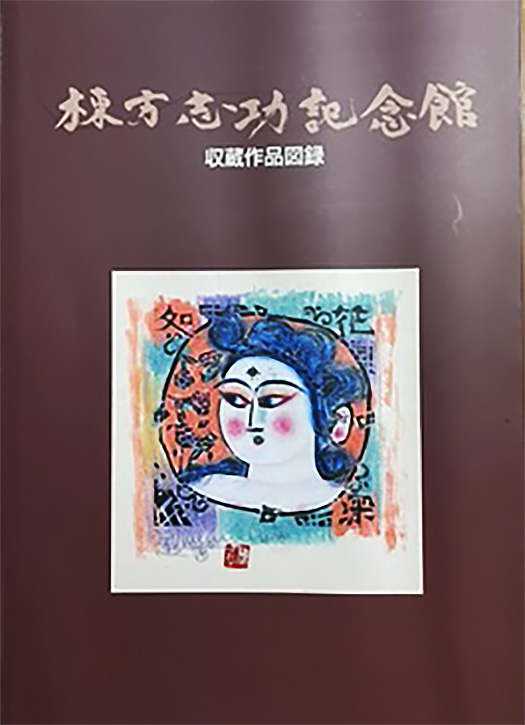
 というような対話ぶりですが、写真の〝棟方志功〟作品集をふと手に取っていっしょにパラパラとページをめくって参観。わたし棟方志功フリークでして、青森市にあった記念館には2度ほど行っています。残念ながら同館は閉館。残されたこの作品図録集はそのうち貴重品になるように予想しています。
 北東北の芸術者たちは、宮澤賢治といいこの棟方志功といい、たぶん東京の「権威」的評価ではない、民衆的な愛好度がきわめて高いと思っています。いわば「民芸」的なフェッチのように思っている。で、3ヶ月の孫に「この女性の表情は、かあちゃんみたいにやさしいだろう?どうだぁ?」などと深層解説を試みている(笑)。かれは不思議そうな表情でみつめている。「お、脈ありかなぁ・・・」と誤解の海に完全に浸るジイジ、であります。
 わたしは各地域にある作家・芸術家の記念館を探訪するのが数寄なのですが、そこで買い求める図録の類いは、資料的価値が高いと思えます。孫にもそういう数寄が、と念を込めている次第。・・・

●お知らせ
拙書「作家と住空間」幻冬舎から電子書籍で発刊
お求めはAmazonで。
https://amzn.asia/d/eUiv9yO

English version⬇

[Indulging in a collection of Shiko Munakata’s works with my 3-month-old grandchild (lol)]
A dialogue that transcends understanding or misunderstanding, reaching the very foundation of consciousness. The speaker’s hope that their “passion” will be conveyed. “Come to think of it, Grandpa said something about that before…”

 Lately, my schedule seems to be getting a bit double-booked. Just yesterday, after I got a message saying my son’s wife was coming over with my grandchild around noon, a friend invited me out for lunch. Something similar happened the day before yesterday, too—it’s just…
But as someone who’s a total “doting grandpa,” I just can’t resist my grandchild (lol).
 He’s only three months old, but my wife, who’s been helping out, is starting to feel the muscle strain. So, I’ve stepped in as the dedicated “cuddle specialist,” joining them in a sort of “shared destiny” partnership.
That said, I always have fun “talking” with this grandson. Of course, he (a boy) can’t understand or speak words yet, but I just keep talking to him one-sidedly. Whether he understands or not is beside the point; my hope is that the fact Grandpa is talking happily will “get through” to him, even just a little, in the depths of his being. So, I’m actually telling him things like, “Listen, when you grow up, make sure you read this book by Yutaka Haniya—especially the part about ‘The Dead Man’s Phone Booth,’ that’s a must-read” (lol).
 Then, my grandson turned three months old, and the moment I picked him up, he gave me a little smile (lol).
I suppose his expression was saying, “Oh, Grandpa’s being weird again.” As for me, I felt like I was floating on air…
That’s the kind of “conversation” we have. I happened to pick up the photo collection of Shiko Munakata’s works and flipped through the pages with him. I’m a huge Shiko Munakata fan, and I’ve visited the memorial museum in Aomori City about twice. Unfortunately, the museum has since closed. I expect this remaining collection of his works will eventually become a valuable treasure.
I believe that artists from northern Tohoku—whether it’s Kenji Miyazawa or Shiko Munakata—enjoy an extremely high level of popular appreciation, rather than the kind of “authoritative” recognition they might get in Tokyo. I see it as a kind of “folk art” fetish, so to speak. So, I’m trying to give my three-month-old grandson a deep analysis, saying things like, “This woman’s expression is as gentle as your mom’s, isn’t it? What do you think?” (laughs). He stares at me with a puzzled look. “Oh, maybe he’s getting it…”—and so I, Grandpa, am completely immersed in a sea of misunderstanding.
 I have a passion for visiting memorial halls dedicated to local artists and creators in various regions, and I find the catalogs and publications I purchase there to have significant historical value. I’m hoping my grandson will develop that same passion as well. …

● Announcement
My book, “Artists and Living Spaces,” has been published as an e-book by Gentosha.
Available on Amazon.


【江戸期“寺請制度”からの情報継承の困難性】


 昨日は次兄と打合せ。次兄から家系史探索の「業務引継命令」を受けて以降のわたしの情報探索の進行状況について、率直な意見交換を行っておりました。
 約束の時間になる寸前に息子夫婦+孫が突然やってきて完全にバッティング。孫は初めて見る大伯父に抱っこされたりしていました(笑)。わたしに似て「やや控えめ(笑)」な孫はこういうときは、ひたすら寝たふり。なかなか泰然自若としていて、面白い。
 ・・・というハプニングはありましたが、その後たっぷり2時間半ほどの打合せ。
 わが家のいま現在の宗旨は真言宗なのですが、わたしが調べていく中で300年前当時に浄土真宗から転宗したことがわかってきた。次兄の調査活動はどちらかといえば「家系の血統の流れ」に絞って進められ宗派などには調査が至っていなかった。対して受け継いだわたしは、背景となる社会状況の中で家系はどのような条件下で,どのようにふるまってきたのか、という側面に注力してきた次第。
 そもそも「原氏」だった家を「三木氏」に転換してきたという特殊な経緯をたどってきているので、こういう「転宗」ということも起こったのだと想像できるのです。
 広島藩浅野家で「苗字帯刀」を許されて「士分」であった家系から、わたしたちの先祖はお隣の福山藩に移転転身を果たして福山藩の塩業の御用商家を営んできた経緯。幕藩体制下では、相当に異質な「ロンダリング」。そうすると家名も同じではいられにくかった。また、福山藩でも士分同格の待遇だったので、逆に当時の社会の「寺請制度」からは規格外の転身。
 そこでロンダリングは宗派にも及んだ。広島藩での「浄土真宗」から福山藩領では「真言宗」に替わっていったという経緯のようなのです。したがっていま現在のわが家に残っている「位牌」の類いもこのロンダリング経緯のままに「三木阿賀屋」の家引継の痕跡がそのままに残されている。DNAとしての家系と、家制度上の家系に不連続関係が生じているのですね。
 わたしの引継調査のいま現在の状況を話し合ってみて、このように解明されてきた次第。江戸期には戸籍制度の根幹であった宗派寺院について、不連続しているのですね。
 この結果「故有りて」という謎めいた記述が六世の祖の記録文に書かれる結果になった。・・・

●お知らせ
拙書「作家と住空間」幻冬舎から電子書籍で発刊
お求めはAmazonで。
https://amzn.asia/d/eUiv9yO

English version⬇

[The Difficulty of Preserving Information Under the Edo-Period “Tera-yose System”]
During the Edo period, families of samurai status who moved across domain borders often became “official merchants” serving the government in neighboring domains. This led to discontinuities in the Tera-yose system—which served as a form of household registration. …

 Yesterday, I had a meeting with my second oldest brother. We had a frank discussion about the progress of my research since he gave me the “order to take over” the family history project.
Just as the appointed time was about to begin, my son and his wife—along with my grandchild—suddenly showed up, completely overlapping our schedules. My grandchild was being held by his great-uncle, whom he was meeting for the first time (lol). Like me, my grandchild is “a bit shy (lol),” so in situations like this, he just pretends to be asleep. He was quite calm and composed—it was amusing.
…Despite that little mishap, we had a full two-and-a-half-hour meeting afterward.
Our family’s current denomination is Shingon Buddhism, but as I’ve been researching, I’ve discovered that we converted from Jodo Shinshu about 300 years ago. My second older brother’s research had focused more on the “flow of the family’s bloodline” and hadn’t delved into matters like religious sects. In contrast, having taken over the research, I have focused on how our family behaved and under what conditions within the social context of the time.
Since our family has a unique history of changing from the “Hara” clan to the “Miki” clan, I can imagine that this “change of sect” occurred as a result.
 Our ancestors originated from a lineage within the Asano clan of the Hiroshima domain that was permitted to bear a surname and carry a sword, thus holding samurai status. They relocated to the neighboring Fukuyama domain, where they established themselves as a merchant family serving the domain’s salt industry. Under the bakufu-han system, this was a highly unusual form of “rebranding.” Consequently, it became difficult to retain the same family name. Furthermore, since they were treated as equals to the samurai class in the Fukuyama Domain, this was, conversely, a transformation that fell outside the norms of the “temple sponsorship system” prevalent in society at the time.
Consequently, this “rebranding” extended to religious affiliation as well. It appears that while they followed the “Jodo Shinshu” sect in the Hiroshima Domain, they switched to the “Shingon” sect within the Fukuyama Domain. Consequently, the “memorial tablets” and similar items remaining in our family today bear the traces of this “rebranding” process, preserving the legacy of the “Miki Agaya” family line. This creates a discontinuity between the family lineage as DNA and the lineage within the feudal household system.
 After discussing the current status of my lineage research, this is how the situation has been clarified. Regarding the sect and temple affiliation—which formed the foundation of the household registration system during the Edo period—there is a discontinuity.
As a result, the enigmatic phrase “for a reason” ended up being written in the record of my sixth-generation ancestor. …

● Announcement
My book, “Writers and Living Spaces,” has been published as an e-book by Gentosha.
Available on Amazon.

【青森県黒石にて“経塚”メディア過去記事に遭遇】


 みなさん「経塚」ってご存知でしょうか? 
 地域住宅雑誌を東北でも発行するようになって、各地を取材行脚する中でわかってきた過去の人びとの「精神性」に深く関わる「遺物・遺跡」です。AI による概要解説は以下:経塚(きょうづか)とは、平安時代中期から末法思想(1052年〜)に基づき、経典を後世や未来の弥勒菩薩へ残すため、経筒などに納めて地中に埋め、小規模な塚を築いた仏教遺跡。〜というもの。
 わたしのブログでは過去数回、取り上げてきています。
 【奥州藤原氏、北海道厚真で「経塚」造営】
 【平泉独立政権と北海道島】
 【国宝建築 白水阿弥陀堂】
 などで全部で7記事。なかでは下の記事が最も古く2007年11/30でもう19年も前。
 北海道で生まれ育った人間は、新開地らしくいわば「伝統的思考」から縁遠い部分があって、東北などの歴史についてその場所に行ってはじめて知らされる体験を重ねておりました。
 末法思想という日本民族の精神史においてきわめて重要な思想も教科書的な知見しかなく、いわば実地で知るようになった次第なのです。ただ、東北各地を巡るうちに奥州藤原氏が対北海道の交易に深く関与した状況に思いが至らされていた。とくに2番目の記事では 〜斉藤利男 弘前大教授のまとめ 独立政権と北方支配〜栄華を支えた蝦夷ヶ島〜として、先生が著作「平泉」で触れられた北海道との関係に触れてきています。
 こういったことから北海道厚真での現地探訪なども行っておりました。
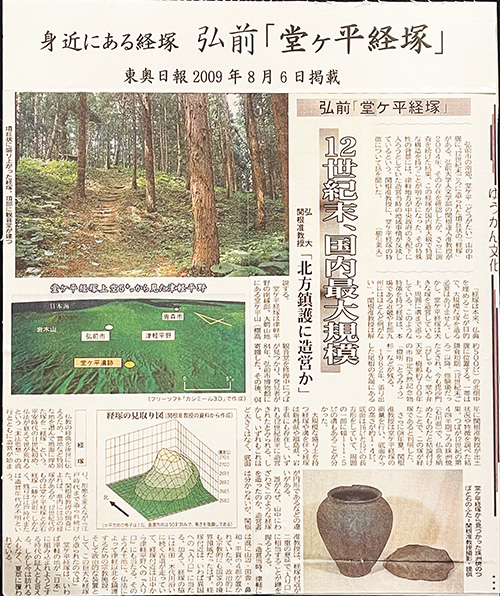
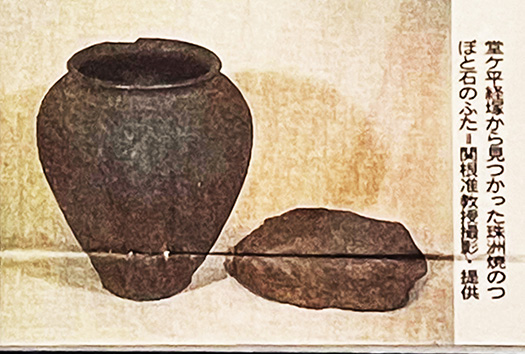
 その関連情報として、2009年8/6の地元紙「東奥日報」の記事に出会ってしまったのです。

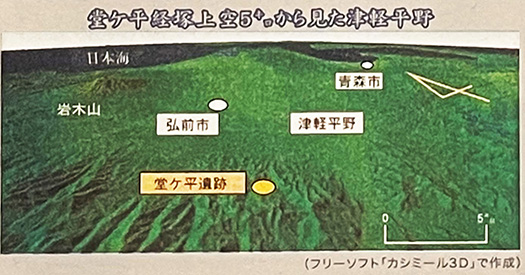
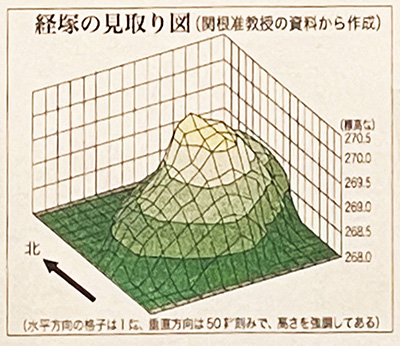
 この記事では弘前大学の関根准教授に取材して、弘前「堂ヶ平経塚」の規模やその「建築意図」について、いわば仏教思想による「鎮護国家」の境界認識が埋蔵されたという趣旨の記事内容が語られていた。
 ・・・数寄な領域について再度、雷鳴のごとくに「オマエ、前から気になっているテーマを思い出せよ!」と天の声を聞く思い。まことに「不勉強」汗顔の至りでありますが、生来の歴史数寄の部分が刺激された。
 たしかに北海道と東北を行き来する仕事人生であったので、この部分も再度学び直して、いま現在の「四百年間のいのちの履歴書」にも反映させてみたいと思われました。
 あ、こちらについても昨日大きな情報進展があった。深く進行中。・・・

●お知らせ
拙書「作家と住空間」幻冬舎から電子書籍で発刊
お求めはAmazonで。
https://amzn.asia/d/eUiv9yO

English version⬇

[Stumbled Upon an Old Media Article About “Kyozuka” in Kuroishi, Aomori Prefecture]
I happened to come across an old article while traveling. I snapped a photo, restored the image on my Mac, and checked the content. Was this a voice from above telling me to remember a topic I’ve been curious about for a while? …

 Have you ever heard of a “Kyozuka”?
Since we began publishing a regional housing magazine in the Tohoku region, I’ve come to understand through my travels and reporting across the area that these are “artifacts and ruins” deeply connected to the “spirituality” of people from the past. Here is a summary explanation generated by AI: A Kyozuka is a Buddhist archaeological site dating from the mid-Heian period, built based on the Mappo ideology (1052–). It consists of small mounds constructed by burying Buddhist scriptures—stored in containers such as sutra tubes—in the ground to preserve them for future generations and the future Bodhisattva Maitreya.
I have covered this topic several times on my blog.
  [The Oshu Fujiwara Clan and the Construction of “Kyozuka” in Atsuma, Hokkaido]
  [The Independent Hiraizumi Regime and the Islands of Hokkaido]
  [National Treasure Architecture: Shirakami Amida Hall]
There are seven articles in total, including these. Among them, the article below is the oldest, dated November 30, 2007—already 19 years ago.
 As someone born and raised in Hokkaido, I’ve always felt somewhat removed from “traditional ways of thinking”—a trait typical of those from newly developed areas—and I’ve repeatedly had the experience of only learning about the history of regions like Tohoku after actually visiting them.
Even regarding the “Mappo” doctrine, an extremely important concept in the spiritual history of the Japanese people, I had only textbook knowledge; it was only through firsthand experience that I came to truly understand it. However, as I traveled around various parts of Tohoku, I began to realize the extent to which the Oshu Fujiwara clan was deeply involved in trade with Hokkaido. In particular, the second article—titled “Summary by Professor Toshio Saito of Hirosaki University: Independent Government and Northern Domination—Ezo Island, the Foundation of Prosperity”—touches on the relationship with Hokkaido that the professor discussed in his book *Hiraizumi*.
Because of this, I also conducted field research in Atsuma, Hokkaido.
 In connection with this, I came across an article in the local newspaper *Tōō Nippō* dated August 6, 2009.

 In this article, Associate Professor Sekine of Hirosaki University was interviewed regarding the scale of Hirosaki’s “Dōga-daira Tsukazuka” and its “architectural intent.” The article discussed the idea that a Buddhist concept of “protecting the nation” and the perception of its boundaries was embedded within the site.
 …Regarding this niche field, I felt as if I heard a voice from the heavens, thunderous as a clap of thunder, saying, “Hey, you! Remember that theme you’ve been curious about all along!” I am truly ashamed of my lack of knowledge, but my innate fascination with history has been piqued.
Indeed, having spent my working life traveling back and forth between Hokkaido and Tohoku, I felt compelled to revisit this subject and incorporate it into my current “400-Year Life Resume.”
Oh, and there was a major development regarding this very topic yesterday as well. It’s progressing deeply. …

【春には海辺の街・小樽海岸の散歩が似合う・・・】


 地震もあり「海辺の散歩」の写真を忘れておりました。
 わたしは札幌市の「西区」に住んでいるので、高速を利用すると小樽海岸までは20-30分で着ける。北海道人はだいたい小樽に対して、母港的なイメージを持っている。北海道開拓の地域的な拠点としてながく機能してきた街。本州社会との交流に於いてその港が、人流物流を支えてきた。
 現代ではそうした機能性はむしろ新千歳空港とそのタウンが担ってきているけれど、昭和中期年代にとっては一種ノスタルジックな気分が漂ってくるのですね。
 そういうノスタルジー性については、わたしたち年代がいちばん最初に気付いて、たとえばレンガ倉庫群についてその空気感・雰囲気を再発見して、ある気分を創造してきたように思っている。そうだ、小樽って面白い雰囲気がある街だよね、と提起してきたように思っている。
 今現在はアジア系を主体とする観光客が運河道路付近を占拠しています。
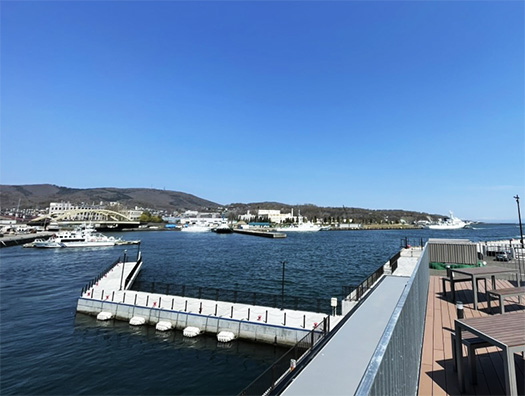
 というところですが、その道路からさらにウォーターフロントの地域は、フェリーターミナルとかヨットハーバーなどが海上交通の側面を見せてくれている。
 加齢してきて散歩が大きな楽しみと健康維持作戦のメインになってきて、この地域の交通量の少なさに気付いています。海岸線のところどころには海釣りを楽しむみなさんのゾーンもあって、そういう近辺にはクルマを駐車させる場所も確保できる。
 そこを拠点にボーッと海を眺めながら散歩として好日を享受する。
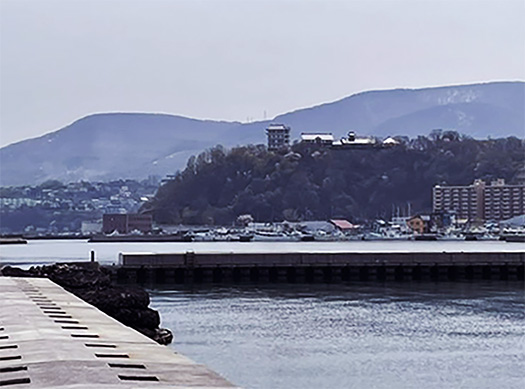
 写真は東端に近い「海陽亭」が頂部にある丘陵を見晴らした様子。手前側にはヨットハーバーがある。その海岸線に面して大型スーパーの店舗が開口部を向けている。
 さまざまな「顔」を見せてくれているけれど、クルマ交通の少なさには驚かされる。海上交通とクルマ交通の「合間」のような雰囲気なので、散歩出来る道幅が広大(笑)。
 天高く、海広く、道が広い・・・。
 こういった小樽の魅力というのもアリかと思い始めております。
 海釣りのみなさんの様子を見ているとニシンとおぼしき魚体が次々と釣り上げられていました。
 そういう歓声も、まことに好日を感じさせてくれています。

●お知らせ
拙書「作家と住空間」幻冬舎から電子書籍で発刊
お求めはAmazonで。
https://amzn.asia/d/eUiv9yO

English version⬇

[Spring is the perfect time for a stroll along the Otaru waterfront…]
Head further toward the waterfront from Otaru’s “Canal Street,” which is bustling with Asian tourists. The area around the sea fishing spots is a pleasant place to take a walk. …

 With the earthquake and all, I completely forgot to post the photos from my “seaside stroll.”
Since I live in Sapporo’s Nishi Ward, it only takes 20 to 30 minutes to reach the Otaru coast via the expressway. Most Hokkaido residents view Otaru as a sort of “home port.” It’s a city that has long served as a regional hub for Hokkaido’s development. Its port has supported the flow of people and goods in exchanges with mainland Japan.
 Nowadays, those functions are largely handled by New Chitose Airport and its surrounding town, but for those of us from the mid-Showa era, a certain nostalgic feeling still lingers.
I believe our generation was the first to notice that nostalgia—we rediscovered the unique atmosphere of places like the brick warehouse complex and helped create a certain mood around them. I feel like we were the ones who first pointed out, “Yeah, Otaru really does have an interesting vibe.”
 Currently, tourists—primarily from Asia—have taken over the area around the canal road.
 That said, beyond that road, the waterfront area—with the ferry terminal and yacht harbor—showcases the maritime aspect of the city.
As I’ve gotten older, walking has become a major source of enjoyment and a key part of my health regimen, and I’ve come to appreciate how little traffic there is in this area. Here and there along the coastline, there are zones where people enjoy sea fishing, and you can even find places to park your car nearby.
Using that as a base, I enjoy a pleasant day strolling while gazing blankly out at the sea.
 The photo shows the view from the hilltop near the eastern end, where “Kaiyo-tei” is located. The yacht harbor is in the foreground. Facing that coastline, a large supermarket has its entrance facing out.
It shows many different “faces,” but I’m surprised by how little car traffic there is. It has an atmosphere like the “space between” maritime and road traffic, so the paths for walking are incredibly wide (lol).
 The sky is high, the sea is vast, and the roads are wide…
I’m starting to think this is part of Otaru’s charm.
Watching the sea anglers, I saw what appeared to be herring being reeled in one after another.
Those cheers truly make me feel the joy of this fine day.

● Announcement
My book, “Writers and Living Spaces,” has been published as an e-book by Gentosha.
Available on Amazon.

【ベッドで13時間の寝ぼけに直撃・地震アラーム!】


 昨日は小樽で温泉に浸かる前に「海岸沿い」の気持ちの良い散歩10,000歩超。
 晴天で風よけの上着はなんとなく必要と事前には感じていましたが、歩き始めたらやや汗ばむほどの超リラックス散策。やっぱり海を見ながら、対話しながら気ままにあるくというのは、この地球にいのちを得てきた動物としての人間の本然を思い知らされるような気分。
 太古から人間は、なんとなく海に対して「生命の源」という意識を持っていたに違いないと思える。こういう気分にわたしは最近「涅槃感」という言葉を宛てているけれど、そのような気分。そしてまだ肉体の若さを確保して、気分良く歩き回れることに感謝しつつ、まだまだ続けられたらと祈念する。
 で、つい歩きすぎかなぁと思って温泉に入ったら,腰から下がバラバラ感に満たされてしまった(泣)。日頃から1日10,000歩は散歩していますが、考えて見ればそれは朝と日中の2回で達成している。一気に歩き抜くのはあんまり記憶していない。そういう状態にそもそもカラダをバラバラにするような温熱効果が働いて、どうやら、その疲労感が一気に迫ってきてしまった。
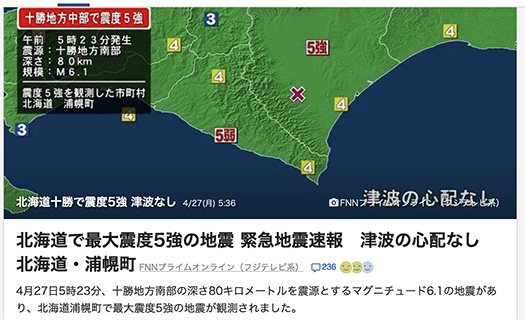
 で、温泉入浴で受けた「注意勧告」のダメージから、遅い昼食後の午後4時くらいからベッドインしておりました。・・・ふつうは5-6時間で一度起きたあと、カラダがスッキリしているのですが、昨晩はまったくダメで、さっぱりスッキリしない。で、なんとか5時前にようやくマシな感じになったので起き出して、家の片付け掃除などを済ませていたら、「緊急地震アラート」でスマホが絶叫。
 アラートに驚いて起きてきたカミさんと寄り添ってその揺れの瞬間を過ごしておりました。
 ・・・まぁまぁ、の揺れっぷり。
 すっかり寝ぼけアタマが叩き起こされてしまった。まぁ、傍目には違いが無いかなぁ(笑)。
 先般のわたしの旅行中での地震の「後発」地震が予想されていましたが、今回のがそれであるかどうか、地震列島、最近活発なので,油断なく過ごしていきたいですね。

●お知らせ
拙書「作家と住空間」幻冬舎から電子書籍で発刊
お求めはAmazonで。
https://amzn.asia/d/eUiv9yO

English version⬇

[Earthquake Alarm Catches Me in the Middle of a 13-Hour Sleep in Bed!]
At first, with my head still foggy, I thought, “Huh, is that the rice cooker beeping?” A message from the earth telling me to wake up. …

 Yesterday in Otaru, before soaking in the hot springs, I took a pleasant walk along the coast—over 10,000 steps.
It was sunny, and I had a feeling beforehand that I might need a windbreaker, but once I started walking, it turned into an incredibly relaxing stroll that even made me break a slight sweat. Walking freely while gazing at the sea and engaging in conversation really makes me feel as though I’m being reminded of humanity’s true nature as animals born to live on this Earth.
 I can’t help but feel that, since ancient times, humans have instinctively regarded the sea as the “source of life.” Lately, I’ve been describing this feeling with the term “nirvana-like sensation,” and that’s exactly how it felt. I’m grateful that my body is still young enough to let me walk around so comfortably, and I pray that I can keep doing this for a long time to come.
So, thinking I might have walked a bit too far, I went into the hot spring—only to find my lower body feeling completely disjointed (sob). I usually walk 10,000 steps a day, but come to think of it, I usually achieve that in two separate sessions—one in the morning and one during the day. I don’t really remember ever walking that much all at once. The thermal effects of the hot spring, which essentially break down the body, must have caused that fatigue to hit me all at once.
So, due to the “warning” I received from the hot spring, I went to bed around 4:00 p.m. after a late lunch. …Usually, I wake up once after 5–6 hours and feel refreshed, but last night was a total bust—I didn’t feel refreshed at all. I finally started to feel somewhat better just before 5:00, so I got up and was tidying up the house when my smartphone started screaming with an “Emergency Earthquake Alert.”
My wife, startled by the alert, came out of bed, and we huddled together through the moment of the tremor.
…It was a pretty decent-sized tremor.
 It completely jolted my sleepy brain awake. Well, I guess it probably looked the same to anyone watching (lol).
There had been predictions of an “aftershock” from the earthquake that happened while I was traveling recently, but whether this was it or not—since we live on an earthquake-prone archipelago that’s been quite active lately—I’d like to stay vigilant.

● Announcement
My book, “Writers and Living Spaces,” has been published as an e-book by Gentosha.
Available on Amazon.